
The characters are fictitious and do not correspond to real people.
Invest at your own discretion.
Hello,
In about 10 minutes you will know:
1.- What affects the value of commodities?
2.- What is this market status based on data?
And also, a debate.
1.- What affects the value of commodities?
The prices of raw materials and their supply and demand are affected by:
1.- Weather conditions.
2.- Geopolitical events, changes in government policies.
3.- Economic activity.
4.- Existing reserves.
5.- World population.
6.- Market manipulation.
1.- Weather conditions. In some raw materials, such as agricultural ones, it affects supply more, in others, such as energy ones, it can affect demand more. For example, a cold storm can destroy a crop, but increase the demand for gas.
2.- Geopolitical events, changes in government policies. Recently, we have seen how conflicts such as the one in Ukraine have affected the supply of wheat, oil and gas.
3.- Economic activity. The greater the economic activity, the greater the demand for raw materials in general.
4.- Existing reserves. Reservations have a restraining effect on prices, especially in times of uncertainty.
5.- World population. An increase in the population will mean an increase in demand.
6.- Market manipulation. Taking gold as an example, most of the existing amount is traded on markets in the form of rights such as futures contracts or ETFs. The gold sales rights provided far exceed the actual physical gold stored by the intermediary entities. This means that these entities can unbalance the balance of real supply and demand. Having bought less gold than the demanded, they are reducing the real price that gold should have. This, of course, does not happen only with gold.
2.- How is the market located based on the data?
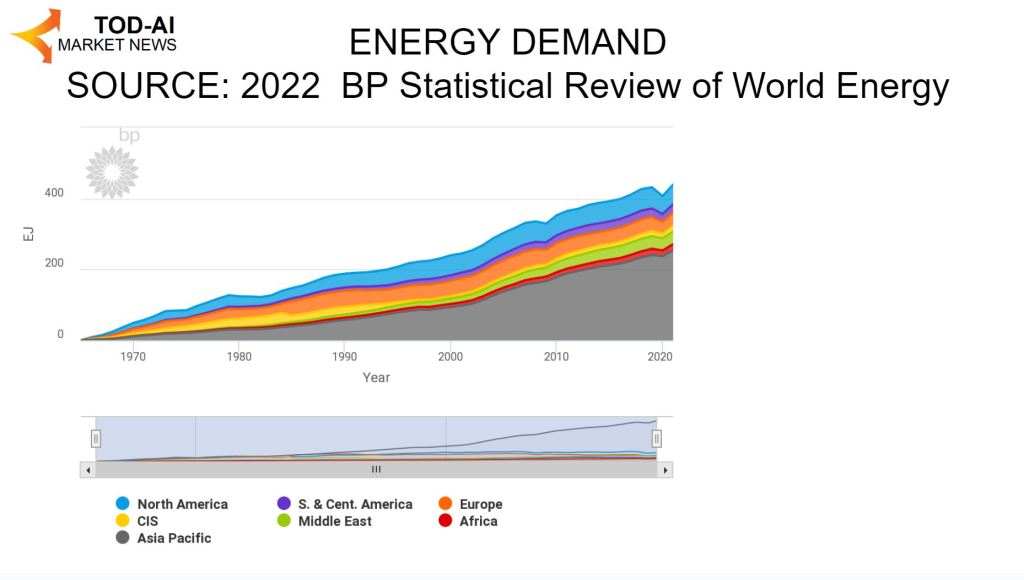
The first indicator that we are going to see is energy demand. Energy demand is growing, which means that more is produced and consumed, increasing the demand for raw materials as well. The growth is mainly driven by the Asia Pacific region.
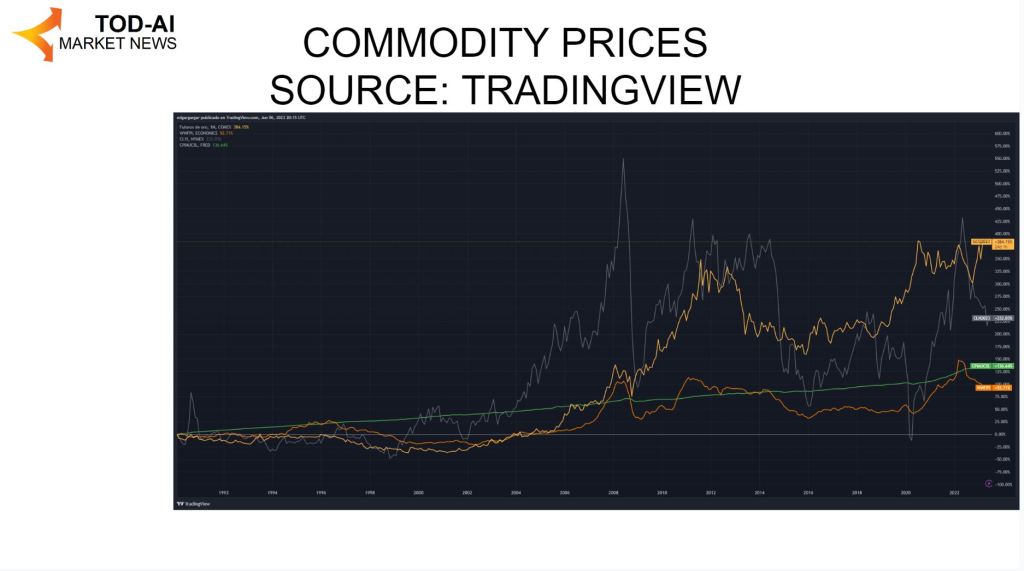
In the following graph we see the evolution of different raw materials since 1990. The green line corresponds to inflation. Gold has risen above inflation reflecting its use as a store of value. Food prices in orange, on the other hand, are below inflation despite the recent increases.
Oil in gray has had more volatility, but it has been bullish in the last 3 decades.
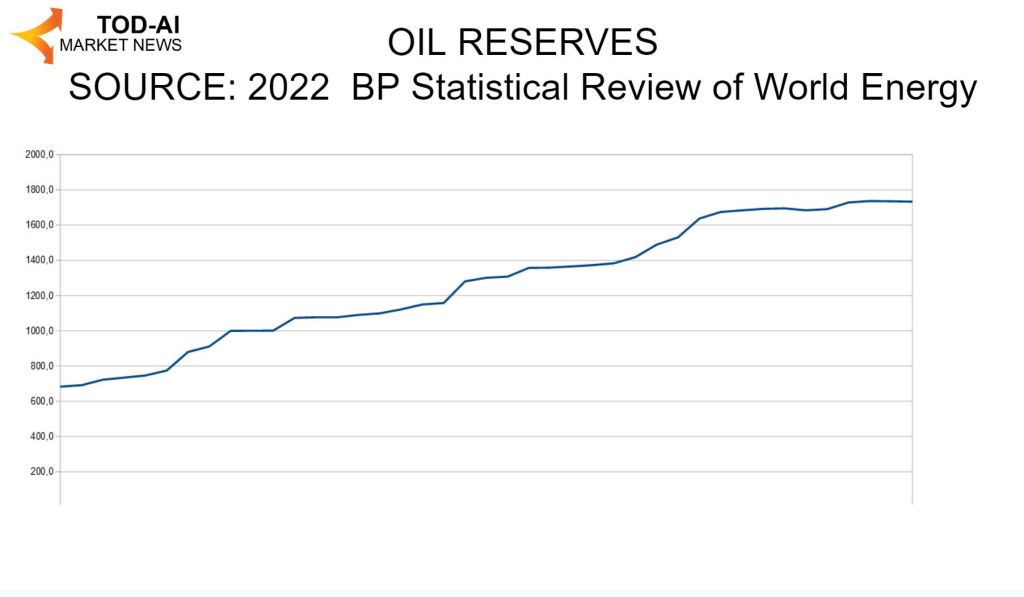
Oil reserves have been on the rise historically, but a stagnation in recent years that may result in a trend change later:
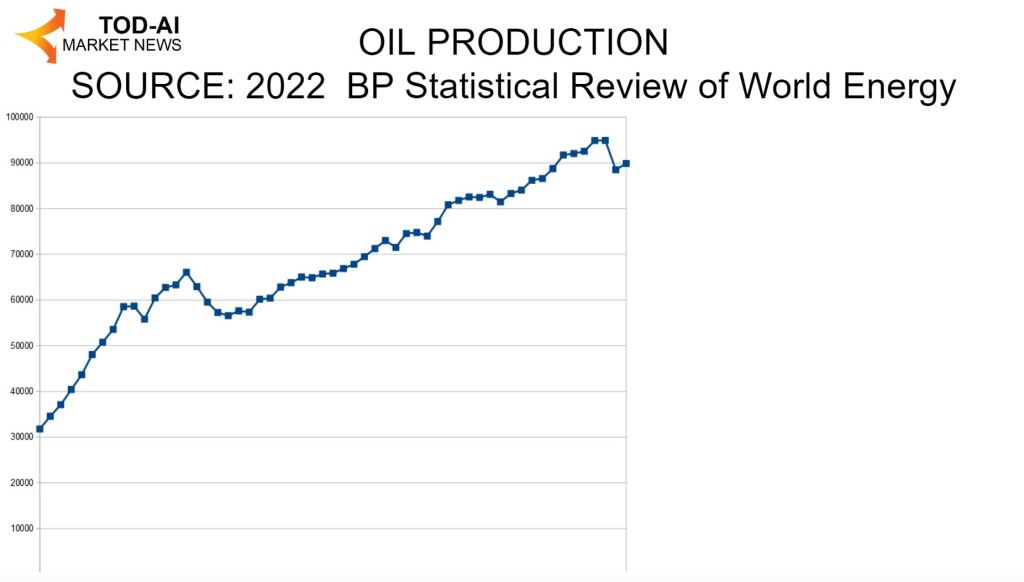
Oil production has also been on the rise historically, but a change in trend is already being observed that may lead to greater shortages:
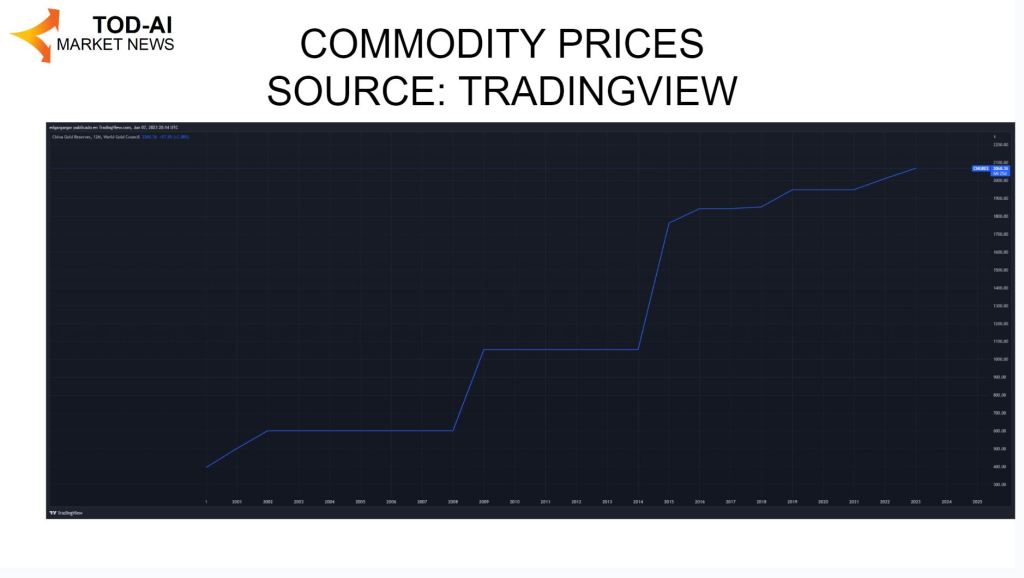
If we look at China’s gold reserves, there is an important accumulation of this metal, which means an increase in demand for it:
It is also very important in raw materials, the change of the economic model that is marked by two headlines:
1.- Produce and consume what is strictly necessary. We have moved from a capitalist model of maximum consumption to one of preserving resources and the planet. This reduces the demand for raw materials.
2.- Population increase, at least until 2050. This should generate a greater demand for raw materials and makes it more impractical to be strict on the previous point.
Discussion
Our fictional characters Laura Mina and Mark Rigs are going to talk to us more end etalle:
Laura Mina:
Hey. The prices of raw materials affect practically the cost of anything. Many companies buy raw materials to hedge against possible price rises. The average person can do this too. For example, investing in natural gas to cover against increases in the price of electricity. For me, this makes it more attractive to invest in raw materials.
Mark Rigs:
Hey. Besides Laura, commodities are real assets. For example, buying silver serves as a store of value in the face of possible financial crises because it will always have a price.
Especially since there is no unlimited amount of raw materials.
Laura Mina:
One of the most interesting raw materials now is natural gas. There has been less consumption than expected and reserves have been increased this last year. However, there have always been price increases in recent years at the peaks of greatest demand such as August or January as can be seen in the graph.
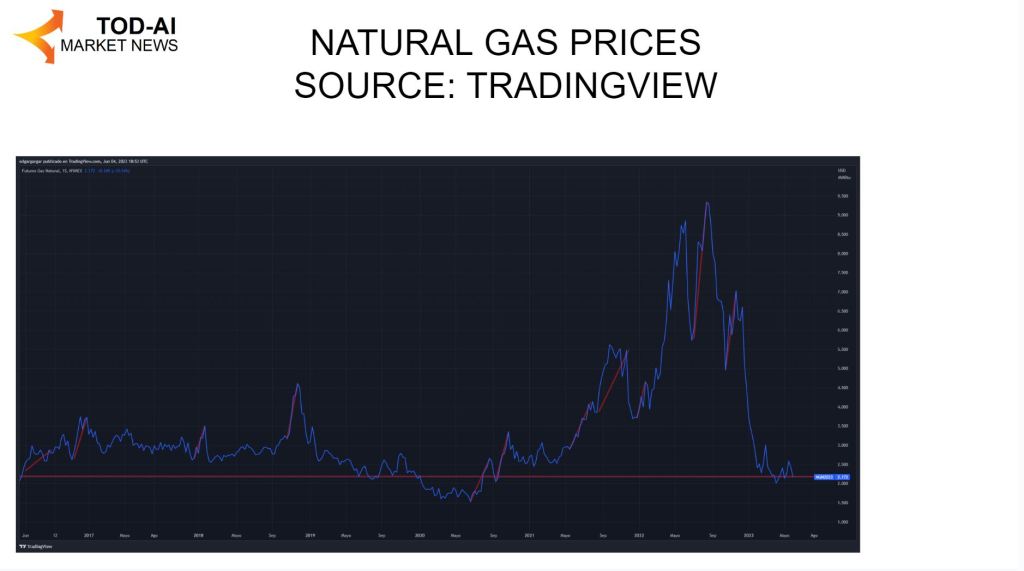
I think we will now see gas price rises affecting inflation. Only the interest that Russia does not collect too much for this raw material can contain it.
Mark Rigs:
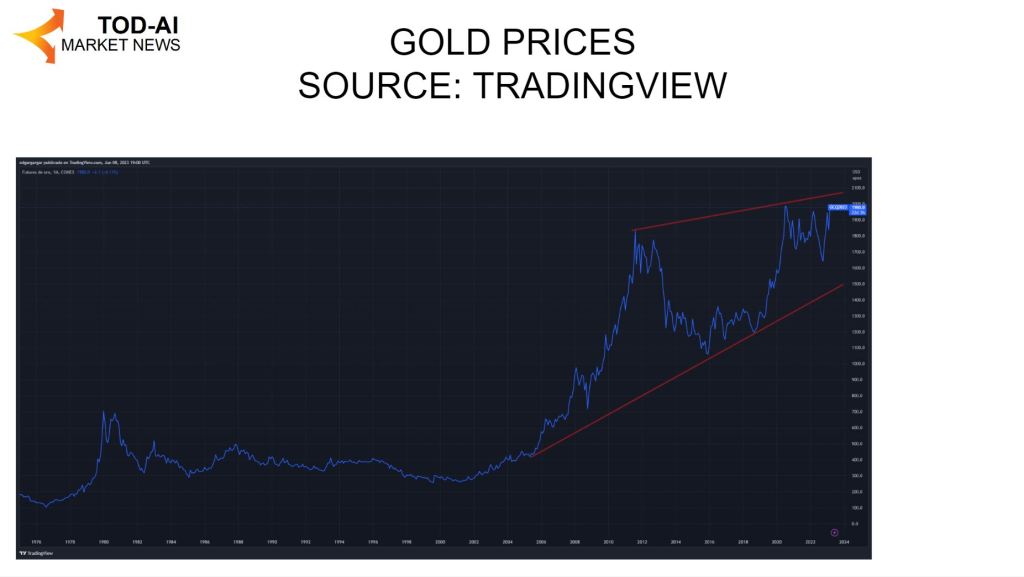
I see gold clearly on the rise since the money supply began to rise enormously. Now I think it will maintain an upward trend for fear of a recession where gold acts as a refuge. However, if the money supply continues to decline marking a change of cycle, the appreciation of currencies could imply that gold reduces its value in dollars or euros.
Laura:
I believe that the level of debt also has a significant impact. Both banks and governments have a duty to back their indebtedness with hard assets.. I think this is a good time in general for commodities., with the exception of the most industrialized ones that could be affected by a recession.
Mark:
I agree. When you think of something that could drive down commodity prices, only manipulation or recession comes to mind..
Tod:
Thank you very much. Everything makes quite sense if manipulation or any unexpected event arises.
In the next episode we will talk about the housing market.
 YOUR MARKET ANALYSIS SITE
Deja un comentario